How to select a harmonic reducer for CNC machines
Learn how to select a harmonic reducer for CNC machines by evaluating peak torque, torsional rigidity and size envelope. Get professional tips for CNC precision gearing selection.
 April 20, 2026
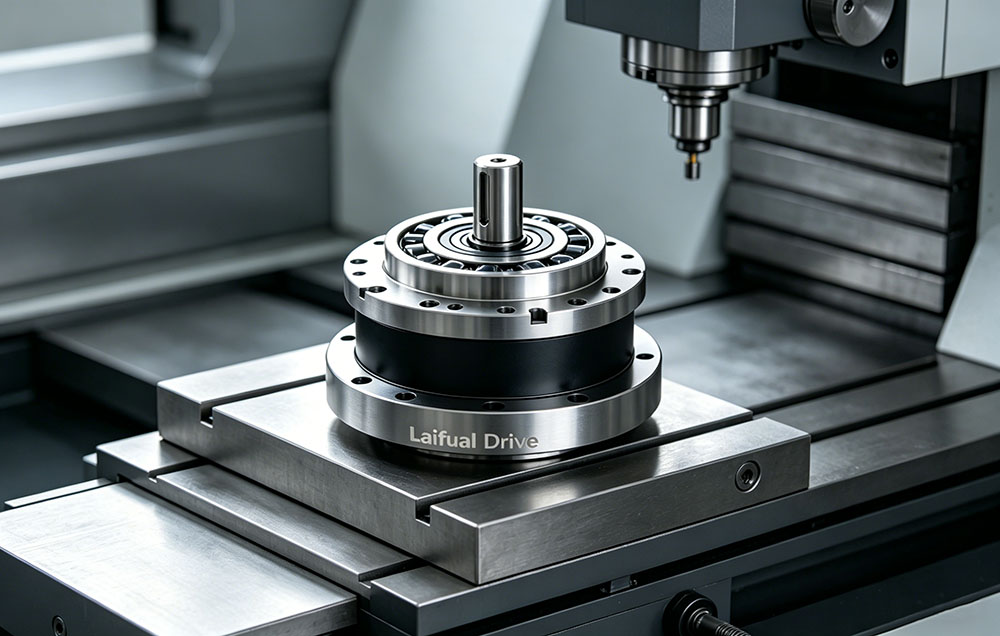

When selecting a harmonic reducer for CNC machines, you must evaluate five critical performance metrics. First, calculate the continuous torque required for standard cutting and the peak torque generated during emergency stops.
Second, choose a reduction ratio that balances your servo motor speed with your desired output torque. Third, verify the torsional stiffness in Newton meters per arc minute to prevent chatter during heavy milling. Finally, confirm the positioning accuracy in arc seconds and ensure the physical dimensions accommodate your machine envelope.
The Foundation of Precise Metal Cutting
Computer numerical control equipment relies entirely on precise and predictable motion. Whether you are designing a high speed automatic tool changer, a tilting trunnion, or a heavy duty rotary table, mechanical play is your absolute worst enemy.
In these applications, standard planetary gearboxes often fall short. They introduce backlash that ruins surface finishes and complicates servo tuning. Because strain wave gearing eliminates this mechanical clearance, it has become the standard for modern machine tool design. However, not all strain wave gears are created equal.
Selecting the exact right component requires a deep understanding of the cutting forces your machine will encounter. You cannot simply look at the physical size of the drive. You must evaluate the raw data. Here is the professional engineering process for selecting a harmonic reducer for a demanding CNC environment.
Step 1: Calculating Torque and Shock Loads
CNC machining is a violent mechanical process. The cutting tool generates massive reactive forces that transfer directly back through the workpiece and into your rotary axes. Therefore, your very first step is defining your complete torque profile.
You must calculate the rated torque for continuous machining operations. However, the much more critical number is your peak torque. If a large drill bit catches in the material, or if an emergency stop engages while the spindle is moving at full rapid traverse, the shock load can easily spike to three or four times the continuous rating.
For instance, if your continuous cutting load generates 100 Newton meters of force, your chosen reducer must have an allowable momentary peak torque of at least 400 Newton meters. If you fail to account for this peak shock load, the massive forces can cause the teeth to ratchet or permanently deform the metal flexspline.
Step 2: Determining the Optimal Reduction Ratio
Once your torque requirements are defined, you need to match your servo motor speed to your output speed requirements. Harmonic reducers excel here because they offer massive gear reduction in a single stage.
Common ratios for CNC applications are 50:1, 80:1, 100:1, and 120:1. If your servo motor spins efficiently at 3000 revolutions per minute and you select a 100:1 ratio, your rotary table will max out at a smooth 30 revolutions per minute.
Choosing a higher reduction ratio increases your output torque multiplier significantly. This allows you to use a smaller and more cost effective servo motor. However, you must carefully check the specification sheets to ensure your high speed motor does not exceed the maximum allowable input speed of the wave generator bearing.
Step 3: Evaluating Torsional Rigidity
In the world of metal cutting, mechanical rigidity is just as important as accuracy. Torsional stiffness measures how much the output shaft winds up or twists like a metal spring when a heavy load is applied.
If your selected reducer lacks stiffness, the cutting forces will cause the workpiece to vibrate and chatter. This directly leads to poor surface finishes, inaccurate dimensions, and broken carbide end mills.
You must review the torsional rigidity chart provided by the manufacturer. Look for the spring rate, which is typically measured in Newton meters per arc minute. A higher number indicates a stiffer drive. For heavy duty milling applications involving steel or titanium, you should always over engineer your rigidity requirements to guarantee a stable cutting platform.
Step 4: Assessing Accuracy and Repeatability
We already know that the continuous elastic deformation of strain wave gears provides zero backlash. However, you still need to rigorously evaluate the positioning accuracy and repeatability metrics.
Positioning accuracy is the maximum expected error between the commanded position and the actual physical position of the table. Repeatability measures how precisely the drive can return to the exact same physical coordinate multiple times in a row.
For high end CNC contouring work, you should look for drives that guarantee repeatability within 10 to 20 arc seconds. This extreme level of precision ensures that complex five axis tool paths blend together perfectly without leaving visible witness marks on the final machined component.
Step 5: Physical Constraints and Hollow Shaft Integration
CNC machine envelopes are highly crowded spaces. You have to route electrical cables, pneumatic air lines, and high pressure coolant hoses to your hydraulic work holding fixtures. Managing these utilities on a rotating axis is a major engineering challenge.
This is exactly why selecting a hollow shaft harmonic reducer is incredibly beneficial for CNC designers. A large center through hole allows you to pass all these critical utilities directly through the center of rotation.
When reviewing the physical dimensions, you must verify that the inner diameter of the hollow shaft can comfortably accommodate your slip rings and rotary unions without rubbing against the spinning walls.
Step 6: Lifespan and Lubrication Needs
Machine tools are expensive investments that are often expected to run continuously across multiple shifts. You must calculate the L10 life expectancy of the gear unit based on your expected duty cycles.
Because the flexible cup undergoes continuous deformation, heat management and lubrication are critical to survival. High speed CNC applications generate significant friction.
You need to consult the manufacturer regarding whether specific aerospace grade grease or an oil bath lubrication system is required for your operating speeds. Proper thermal management ensures the drive will meet its expected lifespan of 7000 to 10000 hours without a drop in accuracy.
Final Thoughts on Sourcing
Selecting the right gearing for a machine tool requires careful mathematical calculation and a solid understanding of machining forces. Taking the time to calculate your peak torque, verify your torsional rigidity, and map out your physical envelope will save you from catastrophic machine failures in the field.
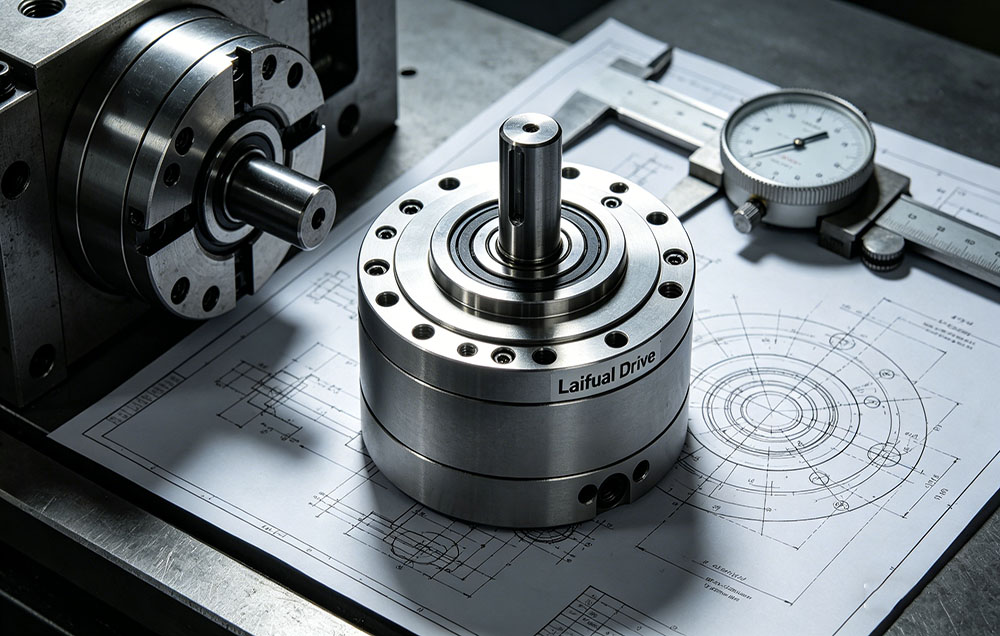
For engineering teams ready to integrate these specialized components into a new machine tool design, working directly with a manufacturer is highly recommended. You can consult with the engineering team at Laifual Drive to analyze your specific CNC load data and select a custom harmonic reducer built to handle the rigorous demands of modern metalworking.