Are Harmonic Drives Backdriveable?
Learn if harmonic drives are backdriveable. Explore how reduction ratio, friction, and torque sensors affect backdrivability and reverse operation in robotics and automation.
 June 01, 2026
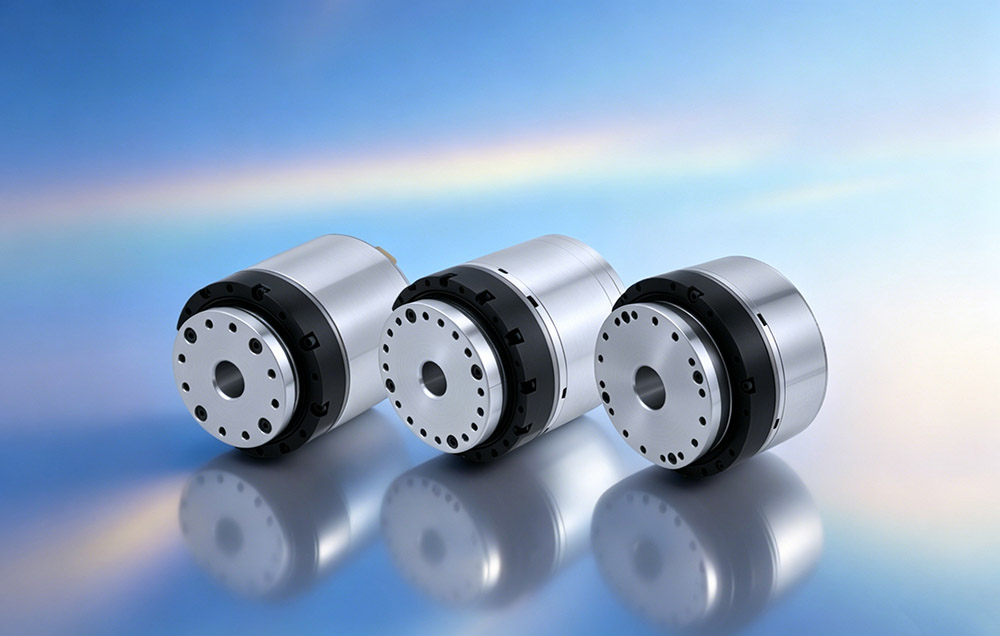

Harmonic drives are widely used in robotics, automation, aerospace, medical devices, and precision machinery due to their compact size, high reduction ratios, and excellent positioning accuracy. Understanding key topics such as backdrivability, torque sensing, reduction ratios, and reverse operation can help engineers select the right system and achieve optimal performance in practical applications.

Key Takeaways
- Harmonic drives can be backdriven under certain conditions, but backdrivability depends on the reduction ratio, load, friction, and system design.
- Lower reduction ratios generally offer easier backdriving than higher reduction ratios.
- Integrated torque sensors provide real-time torque monitoring without significantly affecting the compact design of the drive system.
- Harmonic drives are primarily designed for speed reduction and torque multiplication, but they can mechanically operate in reverse.
- Reverse operation is technically possible, although efficiency, wear, and application requirements should be carefully evaluated.
What Makes Harmonic Drives Different?
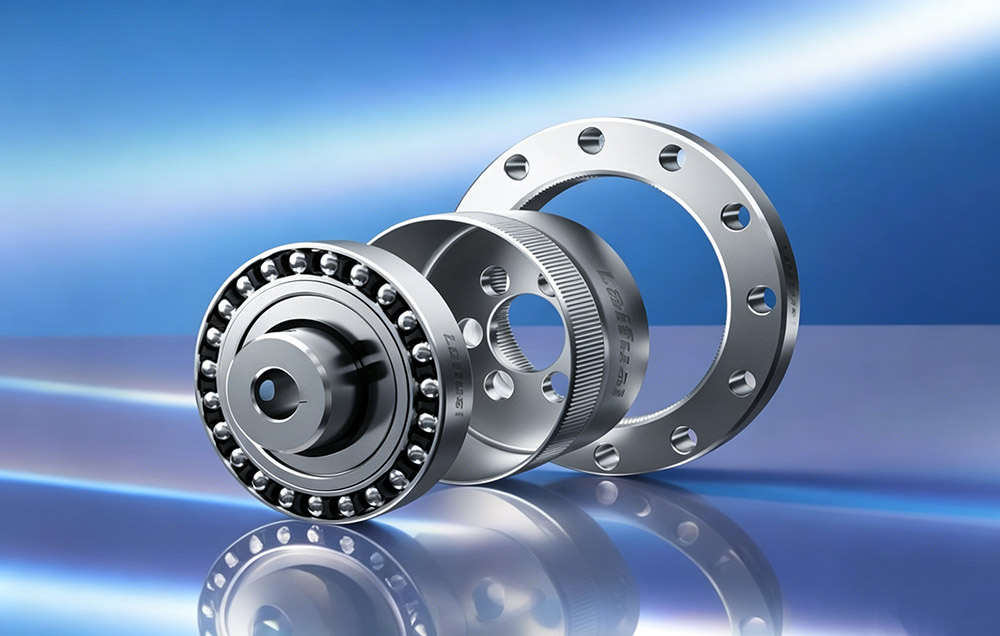
Unlike conventional planetary or spur gear systems, harmonic drives use a unique mechanism consisting of three primary components:
- Circular Spline
- Flex spline
- Wave Generator
The wave generator deforms the flexible spline into an elliptical shape, allowing it to engage with the circular spline at two opposite points. Because the flexspline contains slightly fewer teeth than the circular spline, a reduction ratio is created through the difference in tooth count.
This design allows harmonic drives to achieve extremely high reduction ratios within a compact footprint while maintaining low backlash and excellent positioning accuracy.
These characteristics explain why harmonic drives are frequently used in robotic joints, collaborative robots, camera positioning systems, and precision automation equipment.
Are Harmonic Drives Backdriveable?
One of the most frequently discussed characteristics of harmonic drives is backdrivability.
Backdriving occurs when force applied at the output side causes motion at the input side. In simple terms, instead of the motor driving the load, the load drives the motor.
Many people assume harmonic drives are completely non-backdrivable because of their high reduction ratios. In reality, the answer is more nuanced.
However, the amount of force required depends on several factors, including:
- Reduction ratio
- Internal friction
- Bearing design
- Lubrication
- Load conditions
- Motor characteristics
In low-ratio systems, backdriving may occur relatively easily. In higher-ratio systems, significantly more torque may be required before motion can be transmitted back to the motor.
Why Backdrivability Matters
Backdrivability influences how a machine behaves when external forces are applied.
For example, in collaborative robots, some degree of backdrivability can improve safety and responsiveness during human interaction. If a person pushes on a robotic arm, the system can detect and respond to the external force more naturally.
In contrast, applications that require position holding may benefit from reduced backdrivability because the mechanism resists unwanted movement when power is removed.
The balance between holding capability and backdrivability often becomes a major consideration during system design.
The Effect of Reduction Ratio
Reduction ratio has a significant impact on backdriving behavior.
As the reduction ratio increases, the torque multiplication effect also increases. While this improves load-handling capability, it generally makes the drive harder to backdrive.
For example:
- A 30:1 harmonic drive may be relatively easy to backdrive.
- A 100:1 harmonic drive may require considerably more external torque.
- A 160:1 or higher ratio system often feels much more resistant to reverse motion.
This relationship is one reason why engineers carefully evaluate ratio selection during the design stage.
Harmonic Drive Gear with Torque Sensors
Modern robotic systems increasingly require precise force and torque measurement. As a result, manufacturers have developed harmonic drive systems with integrated torque sensors.
Rather than installing a separate sensor elsewhere in the drivetrain, torque sensing can be built directly into the harmonic drive assembly.
How Torque Sensors Work
Torque sensors measure the slight deformation that occurs when torque passes through a mechanical structure.
The sensor continuously monitors these tiny changes and converts them into electrical signals that can be processed by the control system.
This provides several advantages:
- Real-time torque feedback
- Improved force control
- Better collision detection
- Enhanced safety performance
- Reduced system complexity
In robotics, torque feedback allows a machine to react more intelligently to changing loads and unexpected contact with objects or people.
Benefits for Robotics and Automation
| Application | Role of Integrated Torque Sensing |
| Collaborative Robots | Enables safe human-robot interaction through precise force and torque monitoring. |
| Industrial Robot Joints | Improves motion control, positioning accuracy, and load management. |
| Medical Robotic Systems | Supports precise and responsive movements required for medical procedures and rehabilitation devices. |
| Exoskeletons | Provides real-time torque feedback to enhance user assistance and natural movement. |
| Automated Assembly Equipment | Improves process accuracy, force control, and product quality during assembly operations. |
By measuring torque directly within the drive system, engineers can achieve higher control accuracy while minimizing additional components.
The result is often a cleaner mechanical design and improved overall performance.
Understanding Harmonic Drive Reduction Ratios
Reduction ratio is one of the most important specifications when selecting a harmonic drive.
The ratio determines how many rotations of the input shaft are required to produce one rotation of the output shaft.
For example:
- 50:1 ratio = 50 motor revolutions for 1 output revolution
- 100:1 ratio = 100 motor revolutions for 1 output revolution
Higher ratios provide greater torque multiplication but lower output speed.
Lower ratios provide higher speed but less torque amplification.
Why Ratio Selection Matters
Choosing the correct ratio affects:
| Factor | Impact of Gear Ratio Selection |
| Speed | Determines the output speed of the system. |
| Torque | Influences the amount of torque available at the output. |
| Positioning Accuracy | Affects motion resolution and positioning precision. |
| Backdrivability | Impacts how easily external forces can drive the system in reverse. |
| Motor Sizing | Influences the motor size and power requirements needed for the application. |
| Energy Consumption | Affects overall system efficiency and power usage. |
Selecting an excessively high ratio can reduce efficiency and make the system feel less responsive.
Choosing a ratio that is too low may leave insufficient torque for the application.
The optimal balance depends on the specific performance requirements of the machine.
Harmonic Drive Ratio Calculations
The reduction ratio of a harmonic drive is determined by the difference in tooth count between the flex spline and circular spline.
Although the mathematical calculation can be performed manually, many engineers use ratio calculators during the design process to quickly evaluate different configurations.
These tools help estimate output speed, output torque, and overall system performance before hardware is selected.
Can a Harmonic Drive Reducer Be Used in Reverse?
Another common question involves operating a harmonic drive in reverse.
In other words, can a harmonic drive reducer be used as a speed increaser rather than a speed reducer?
Mechanical Possibility
The gear mechanism itself can transmit motion in either direction.
If the output side drives the system, rotational motion can be transferred back through the harmonic drive and appear at the input side.
This means that gear-up operation is technically possible.
Practical Considerations
Although reverse operation is mechanically feasible, several practical factors should be considered.
First, harmonic drives are optimized for reduction applications. Their geometry, efficiency characteristics, and load distribution are primarily designed around reducing speed and increasing torque.
Second, efficiency losses become more noticeable when power flows in the reverse direction.
Third, the system may experience different loading patterns than originally intended.
Finally, the motor and control system must also be capable of handling the reverse power flow.
Because of these considerations, engineers typically use harmonic drives as reducers rather than dedicated speed increasers.
Where Reverse Operation May Be Useful
There are situations where reverse operation can still be beneficial.
Examples include:
- Test equipment
- Research platforms
- Experimental robotics
- Motion simulation systems
- Specialized automation mechanisms
In these cases, designers may intentionally exploit the ability of the harmonic drive to transmit motion in either direction.
Finding the Right Balance
Backdrivability, torque sensing, reduction ratios, and reverse operation are all interconnected aspects of harmonic drive performance.
A lower ratio may improve backdrivability but reduce available torque.
A higher ratio may enhance load capacity but increase resistance to reverse motion.
Integrated torque sensors can provide valuable feedback that improves control accuracy and safety.
Reverse operation remains mechanically possible, although it is not the primary purpose of most harmonic drive systems.
Understanding how these factors interact allows engineers to build more efficient, responsive, and reliable motion control systems.
Conclusion
From collaborative robots to precision automation equipment, harmonic drives continue to play an important role in modern motion control. Their ability to deliver high torque, compact packaging, and accurate positioning makes them well suited for demanding applications.
Whether you’re evaluating backdrivability, exploring torque sensing technology, selecting the right reduction ratio, or considering reverse operation, a clear understanding of these characteristics can help you achieve better system performance and long-term reliability. Explore our harmonic drive solutions and find the right balance of precision, torque, and performance. We’re always here if you’d like to discuss your application.
Q1 Are harmonic drives fully backdriveable?
Most harmonic drives can be backdriven, but the required force depends on the reduction ratio, friction, load conditions, and system configuration. Higher-ratio drives generally resist backdriving more strongly.
Q2 Do harmonic drives have self-locking properties?
Harmonic drives are not truly self-locking. However, high reduction ratios and internal friction can create significant resistance to reverse motion, which may sometimes appear similar to self-locking behavior.
Q3 Why are torque sensors integrated into harmonic drives?
Integrated torque sensors provide direct torque measurement within the drivetrain, enabling more accurate force control, collision detection, and system monitoring without adding bulky external components.
Q4 Does a higher reduction ratio increase torque?
Yes. Increasing the reduction ratio generally increases output torque while reducing output speed. This is one of the primary advantages of harmonic drive systems.
Q5 Can a harmonic drive be used as a speed increaser?
Yes, a harmonic drive can mechanically operate in reverse and increase speed. However, most designs are optimized for reduction applications, so efficiency and performance should be evaluated carefully before using the drive in this manner.
Q6 Are harmonic drives suitable for collaborative robots?
Yes. Harmonic drives are widely used in collaborative robots because they provide compact size, high precision, low backlash, and compatibility with advanced torque sensing technologies.
Q7 How do I choose the right harmonic drive ratio?
The ideal ratio depends on the required output speed, torque, positioning accuracy, motor characteristics, and desired level of backdrivability. Evaluating the complete motion system usually leads to the best selection.