Harmonic Reducer Working Principle
Learn the harmonic reducer working principle, elastic deformation mechanism & structure of precision harmonic drive gearboxes for robotics and automation.
 June 15, 2026
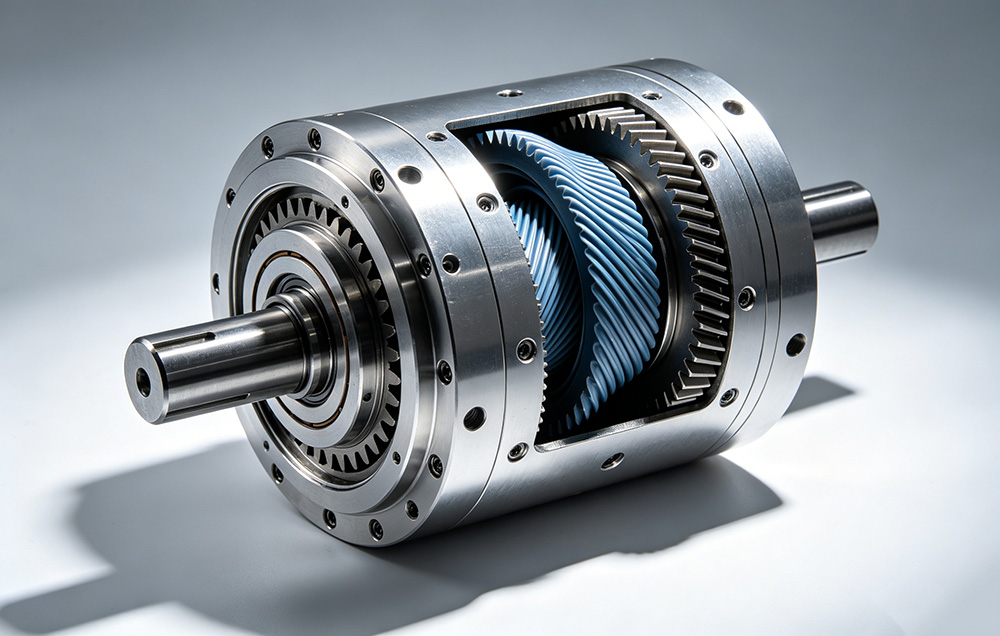

As precision motion systems continue to evolve, the demand for compact, accurate, and efficient transmission solutions keeps increasing. Harmonic reducers are widely used because they provide high reduction ratios, precise positioning, and reliable torque transmission within a compact structure.
These characteristics make them well suited for robotics, aerospace, medical equipment, and automation systems where space efficiency and motion accuracy are key requirements.

Core Key Points
Harmonic reducers use elastic deformation between a wave generator, flexspline, and circular spline to achieve high reduction ratios, compact size, high torque, and precise positioning, making them widely used in robotics, aerospace, semiconductor, and medical applications.
What Is a Harmonic Reducer?
A harmonic reducer, also known as a harmonic drive gearbox, is a precision transmission system designed to achieve high reduction ratios with minimal backlash. It was originally developed to meet the demand for lightweight yet high-performance gear systems in advanced engineering fields.
The key difference between a harmonic reducer and traditional gearboxes lies in the method of power transmission. Instead of using rigid gear teeth engagement, it relies on the controlled elastic deformation of a flexible component. This allows smooth motion transfer with extremely precise positioning capability.
Structure of a Harmonic Drive System
A typical harmonic reducer consists of three main components:
1. Wave Generator
The wave generator is an elliptical cam fitted with a ball bearing. It acts as the input element of the system. When it rotates, it forces the flexible component to deform into an elliptical shape, creating controlled engagement between gear teeth.
2. Flexspline
The flexspline is a thin-walled, flexible metal cup with external teeth. It deforms elastically under the influence of the wave generator. Its ability to flex while maintaining structural integrity is central to the entire working principle.
3. Circular Spline
The circular spline is a rigid ring with internal teeth. It remains stationary in most configurations and engages with the flexspline at two opposite points due to the elliptical shape created by the wave generator.
Harmonic Reducer Working Principle
The operation of a harmonic drive can be understood through a simple sequence of motion:
When the wave generator rotates inside the flexspline, it forces the flexspline to deform into an elliptical shape. This deformation causes the flexspline teeth to engage with the circular spline teeth at two opposite regions of the ellipse.
Because the flexspline typically has slightly fewer teeth than the circular spline, each rotation of the wave generator causes a gradual relative displacement between the two gear sets. This small difference in tooth count results in a highly reduced output speed at the flexspline.
In most configurations:
- The wave generator acts as the input
- The circular spline is fixed
- The flexspline serves as the output
As the wave generator continues rotating, the flexspline moves in the opposite direction at a significantly reduced speed. This difference creates a high reduction ratio, often ranging from 30:1 to over 160:1 in a single stage.
Because multiple teeth are engaged simultaneously, the load is distributed evenly, resulting in smooth transmission, high torque capacity, and minimal backlash.
Key Features of Harmonic Drive Systems
One of the most distinctive characteristics of harmonic reducers is their ability to achieve high precision motion control without complex multi-stage gear assemblies.
| Feature | Description |
| High Reduction Ratio in Compact Size | A single harmonic stage can achieve reduction ratios that would normally require multiple gear stages in traditional systems, making it ideal for compact mechanical designs. |
| Near-Zero Backlash | Multiple teeth remain in constant contact, reducing mechanical play and improving positioning accuracy. |
| High Torque Density | The flexible structure distributes load across many teeth, enabling high torque output relative to its size. |
| Smooth Motion Transmission | Continuous elastic deformation provides smoother motion compared to rigid gear engagement systems. |
Advantages in Engineering Applications
Harmonic reducers are often selected when precision and compactness are more important than raw speed. Their advantages include:
| Advantage | Description |
| Reduced Mechanical Complexity | Simplifies system design by reducing the need for multi-stage gear arrangements. |
| High Positioning Repeatability | Ensures consistent and accurate positioning across repeated operations. |
| Lightweight Structure | Offers a compact and lightweight design suitable for space-constrained applications. |
| Excellent Load Distribution | Distributes load across multiple contact points, improving durability and performance. |
| Quiet Operation Under Load | Maintains low noise levels even when operating under load conditions. |
These characteristics make them suitable for advanced automation systems where stability and accuracy are essential.
Applications of Harmonic Reducers
Robotics
Industrial robots and collaborative robots frequently use harmonic drives in joint systems. Their compact size and precision allow smooth multi-axis movement with high repeatability.
Aerospace Systems
In satellite mechanisms and space equipment, weight and reliability are critical. Harmonic reducers provide stable performance with minimal maintenance requirements.
Semiconductor Manufacturing
Precision alignment systems in semiconductor equipment rely on harmonic drives for accurate positioning during wafer handling and lithography processes.
Medical Devices
Surgical robots and diagnostic equipment benefit from the smooth and controlled motion provided by harmonic reducers, improving operational safety and accuracy.
Automation Equipment
High-end CNC machines, optical instruments, and precision assembly systems also utilize harmonic drives for controlled motion and reduced mechanical error.
Limitations to Consider
Although harmonic reducers offer many advantages, they also have certain limitations. Their elastic components may experience fatigue under extreme operating conditions, which can affect long-term durability. They are also not ideal for very high-speed continuous rotation due to the nature of their deformation-based mechanism.
In some load profiles, their efficiency can decrease compared to other gear systems. Additionally, harmonic reducers are more sensitive to shock loads than rigid gear systems, requiring careful control of operating conditions to ensure reliable performance.
Understanding these factors helps engineers choose the right transmission system for specific applications.
Design Considerations
When integrating a harmonic reducer into a system, several factors are usually evaluated:
- Required torque and load conditions
- Desired reduction ratio
- Space constraints
- Operating environment
- Expected duty cycle
Proper selection ensures long-term reliability and optimal performance.
Conclusion
Harmonic reducers represent a highly specialized form of motion control technology that combines compact design with precise mechanical performance. Through the interaction of the wave generator, flexspline, and circular spline, they achieve efficient torque transmission and high reduction ratios in a single stage.
Their ability to deliver smooth motion, low backlash, and high accuracy has made them a preferred choice in industries where precision cannot be compromised. As automation and robotics continue to evolve, harmonic drive systems remain an important solution for advanced mechanical design challenges.
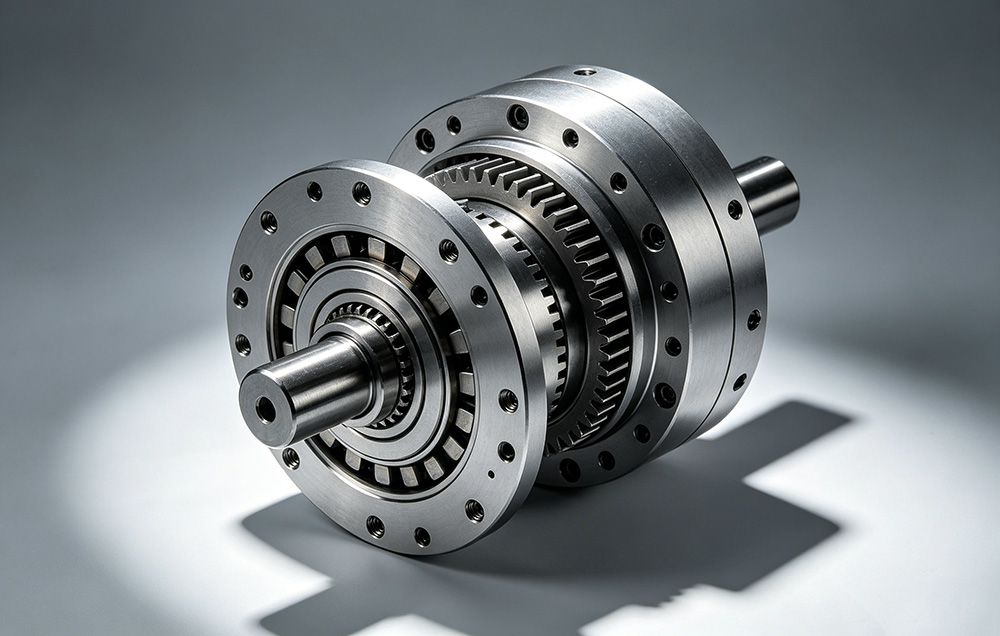
I bring you high-precision harmonic drive solutions that deliver smooth motion, compact design, and reliable torque performance. If you want to learn more or need support, feel free to reach out anytime.
Q1 What is the main principle of a harmonic reducer?
A harmonic reducer works by using elastic deformation of a flexible gear (flexspline) to create controlled gear engagement with a rigid circular spline, producing high reduction ratios through slight differences in tooth count.
Q2 Why does a harmonic drive achieve high precision?
Because multiple teeth are engaged simultaneously and backlash is extremely low, the system maintains consistent positioning accuracy even under load.
Q3 Where are harmonic reducers commonly used?
They are widely used in robotics, aerospace systems, semiconductor manufacturing equipment, medical devices, and precision automation systems.
Q4 What makes harmonic reducers different from traditional gearboxes?
Unlike traditional gear systems that rely on rigid gear meshing, harmonic reducers use flexible deformation to transmit motion, allowing higher reduction ratios in a smaller space.
Q5 Are harmonic drives suitable for high-speed applications?
They are generally better suited for low to medium speed applications where precision and torque are more important than rotational speed.