July 29, 2026
Every humanoid robot platform faces the same challenge: prototype units cost far more than the price point needed for commercial viability.
The actuator system, and the harmonic reducers within it, typically represent a disproportionate share of this cost gap. Understanding where those costs come from, and how they can be reduced, is central to the industrialization of humanoid robotics.
The Prototype-to-Production Cost Gap
In prototype quantities, precision harmonic reducers are essentially custom-machined components. Each flexspline may be produced on general-purpose CNC equipment with long cycle times and significant material waste.
Quality inspection is manual and time-consuming. Assembly and testing are performed by specialized technicians. These costs are acceptable when building five robots; they become prohibitive when building five thousand.
The transition to volume production changes every aspect of manufacturing. Dedicated production lines replace general-purpose machines. Automated inspection replaces manual quality control.
Batch processing and standardized workflows replace one-off assembly. The per-unit cost can drop substantially, though the fixed investment in production equipment is significant.
Manufacturing Scale as the Primary Cost Lever
For harmonic reducers, scale economies come from several sources. Gear shaping machines represent major capital investments, but once amortized across high volumes, their per-unit cost contribution shrinks. Raw material costs decline with bulk purchasing.
Process yields improve as production teams accumulate experience with specific SKUs. And perhaps most importantly, dedicated tooling for high-volume parts eliminates the setup time and variability associated with flexible manufacturing.
Integrated Joint Modules and Assembly Cost
Beyond the reducer itself, assembly labor represents a cost that scales less favorably with volume. This is where integrated joint modules offer an advantage.
When a robot OEM buys a pre-assembled, pre-tested joint module rather than individual components, the module manufacturer absorbs the assembly labor cost within its own higher-volume, more automated production environment.
The Trajectory Forward
Industry-wide, the direction is clear. Harmonic reducer costs will decline as production volumes increase, manufacturing processes mature, and competition among suppliers intensifies.
The companies that have already invested in full-chain production capacity (controlling the critical processes from raw material to finished component) will be best positioned to capture the volume-driven cost reductions that enable humanoid robots to reach commercially viable price points.
Design for Manufacturability in Harmonic Reducers
Cost reduction does not happen solely on the factory floor. Many of the most impactful cost reductions are designed into the product before the first part is machined.
Design for manufacturability (DFM) principles applied to harmonic reducers include reducing the number of separate machining operations, designing features that can be produced on standard tooling rather than custom fixtures, and selecting materials that balance performance requirements with machinability and availability.
The tooth profile design itself has significant manufacturing cost implications. An involute tooth profile, while mathematically straightforward, may require more complex machining paths and longer cycle times than optimized profiles.
Laifual’s delta-gear tooth profile, used in the FS and FH series, represents an approach where the tooth geometry is designed not just for meshing performance but also for manufacturing efficiency.
The company’s progression through multiple product generations suggests iterative refinement of both the design and the manufacturing process.
Supply Chain Depth and Raw Material Strategy
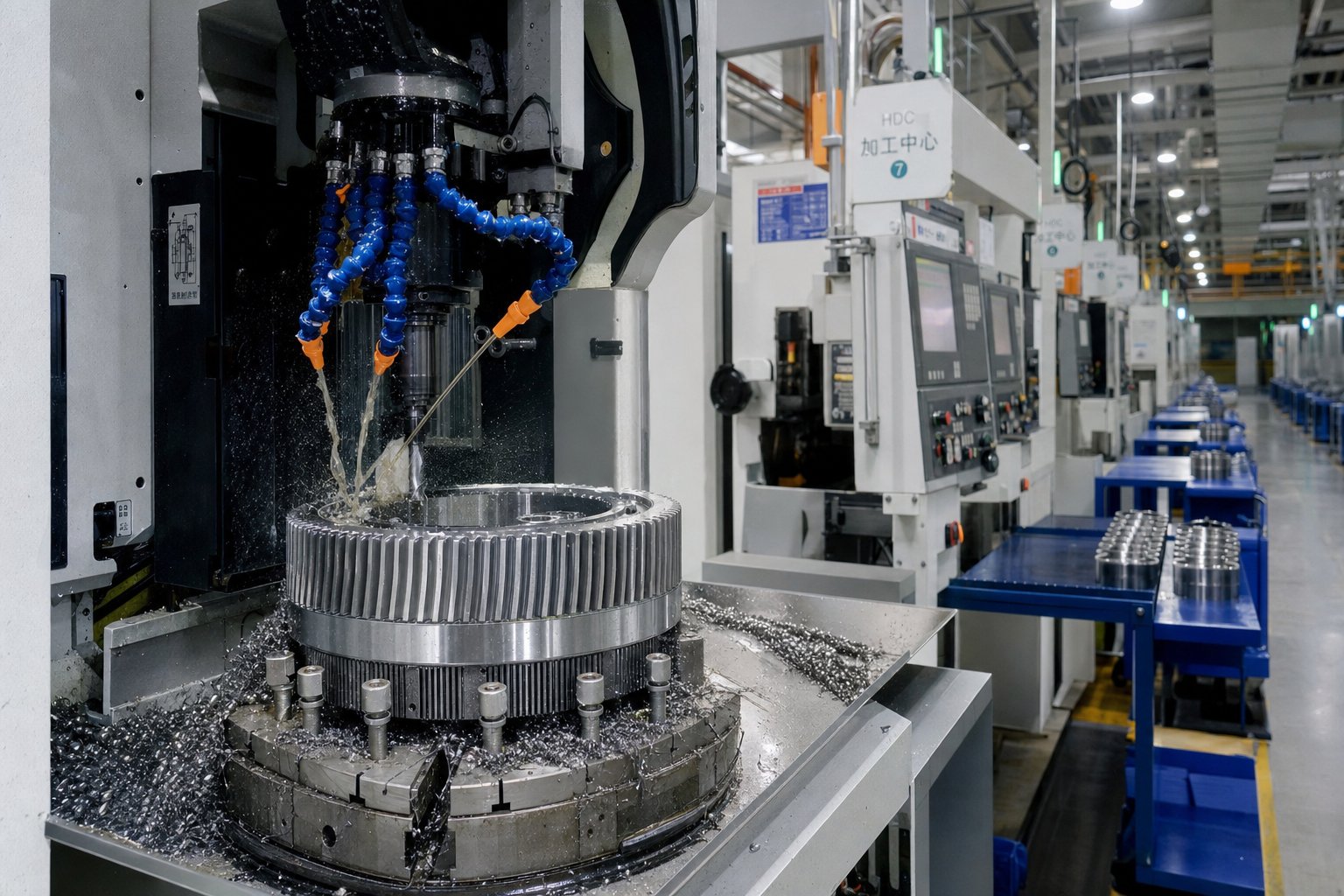
The cost structure of a harmonic reducer is influenced by factors that extend beyond the factory walls. Raw material procurement, particularly for the specialty steels used in flexsplines and circular splines, represents a meaningful portion of total cost.
Long-term supply agreements, strategic inventory management, and relationships with multiple steel suppliers all contribute to cost stability.
For high-volume manufacturers, the ability to influence upstream material specifications becomes a competitive advantage. A reducer manufacturer that can work with steel mills to develop application-specific alloys or processing routes may achieve material properties that reduce downstream manufacturing costs.
Similarly, in-house heat treatment and surface finishing capabilities eliminate the cost and lead-time markup of outsourced processing. Laifual’s full-chain production model, which the company emphasizes in its public materials, encompasses these upstream and downstream activities within a single operational framework.
The Manufacturing Challenge Ahead
The transition from hand-built prototypes to mass-produced humanoid robots is one of the great manufacturing challenges of this decade. It demands the same production engineering that transformed automobiles from luxury items to everyday transportation.
Harmonic reducer manufacturers sit at the center of this challenge. Their ability to drive down costs through scale, process innovation, and design optimization will determine how quickly humanoid robots reach commercially viable price points.
Laifual’s full-chain production model is built for scale. Learn about our manufacturing capabilities or contact us to discuss volume pricing for your production program.