Harmonic Planetary Systems Explained
Explore harmonic planetary systems combining precision, high torque, and low backlash for robotics & automation. Learn how HPGP gearboxes improve motion control.
 June 09, 2026
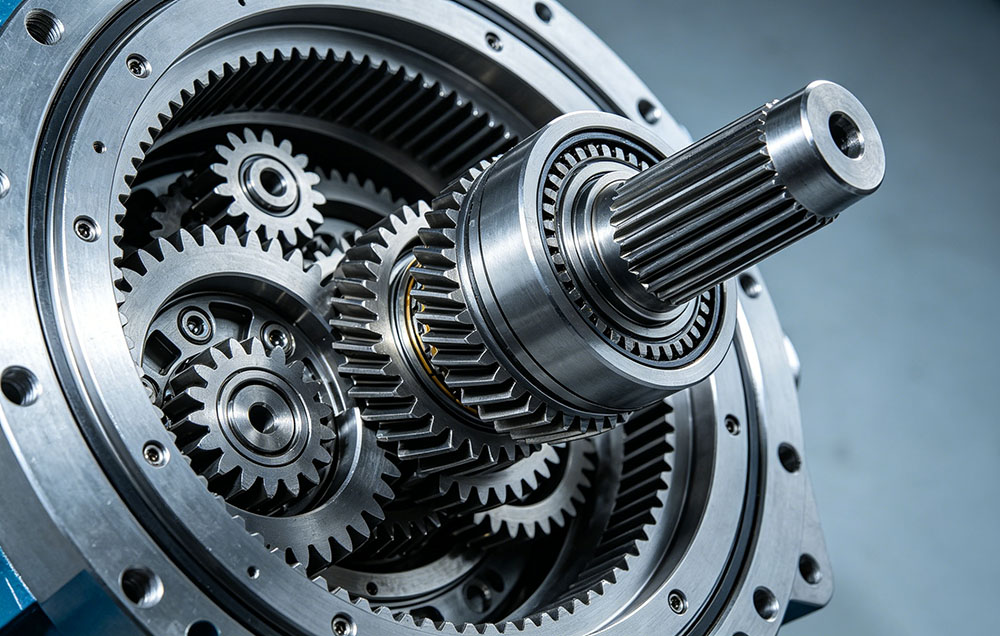
 > Harmonic Planetary Systems Explained
 As motion control systems continue to demand greater precision, higher torque, and more compact designs, gearbox technology has evolved to meet these challenges. Harmonic planetary gearboxes combine the accuracy of harmonic drive technology with the strength of planetary gear systems, delivering low backlash, high torque density, and reliable performance in a compact package.
This unique combination makes them a popular choice for robotics, automation equipment, and precision servo applications where both accuracy and load capacity are essential.

Core Takeaways
Harmonic planetary systems integrate harmonic drive precision with planetary gear strength to deliver compact, high-torque, low-backlash, and highly accurate motion control for robotics, automation, and precision servo applications.
Understanding Harmonic Planetary Gearbox Technology
Motion control systems often require a balance between torque density, precision, and durability. A harmonic planetary gearbox is developed to meet these demands by combining two established transmission principles: harmonic drive technology and planetary gearing.
A harmonic drive typically uses a flexspline, wave generator, and circular spline to achieve near-zero backlash and very high reduction ratios. Planetary gear systems, on the other hand, distribute load across multiple gear meshes, offering strength, durability, and efficient torque transmission.
When these two ideas are integrated, the result is a hybrid system that delivers both precision and torque capacity in a compact mechanical layout. This combination is what defines harmonic planetary gear technology.
How Harmonic Drive Planetary Gears Work
Harmonic drive planetary gears build on the traditional harmonic motion principle while introducing planetary gear stages to improve load handling and operational stability.
In a typical configuration, torque is transmitted through a harmonic drive stage that provides high reduction and precise motion control. This is then combined with a planetary gear stage that distributes the mechanical load across multiple contact points. The interaction between these stages allows the system to achieve smooth torque transmission without sacrificing accuracy.
This dual-stage structure also helps reduce stress concentration on individual components. Instead of relying on a single gear interface, the load is shared, which improves durability and extends service life.
Another advantage of this design is improved stiffness. In many precision systems, torsional stiffness directly affects positioning accuracy and responsiveness. Harmonic planetary gears enhance this property, making them suitable for servo-driven applications where repeatability is required.
Harmonic Planetary Gearbox vs Traditional Planetary Gearbox
| Aspect | Traditional Planetary Gearbox | Harmonic Planetary Gearbox |
| Structure | Uses a sun gear, multiple planet gears, and an outer ring gear for torque transmission. | Combines harmonic drive principles with planetary gear stages for enhanced precision and load handling. |
| Backlash | Typically has some degree of backlash, which may affect high-precision applications. | Extremely low or near-zero backlash, enabling higher positioning accuracy. |
| Motion Quality | Efficient and strong, suitable for general torque transmission. | Provides smoother motion behavior with higher precision control. |
| Load Capability | Excels in high-load environments and continuous duty cycles. | Balances torque control with precision but may be less optimized for extreme continuous heavy loads. |
| Complexity | Relatively simple and robust design. | More complex structure requiring careful system integration. |
| Application Focus | Preferred for high-load, general-purpose industrial applications. | Preferred for applications requiring precision, compact size, and refined torque control. |
| Selection Basis | Chosen for durability and load performance. | Chosen for accuracy, compactness, and high-end motion control requirements. |
HPGP High Torque Harmonic Planetary Systems
HPGP, or Harmonic Planetary Gearbox systems, represent a refined category of hybrid motion solutions designed for high torque and compact installation spaces.
One of the defining features of HPGP systems is their ability to deliver high output torque without significantly increasing size or weight. This is particularly valuable in robotics, where space constraints and payload efficiency are critical considerations.
The design also focuses on smooth torque transmission. By integrating harmonic drive precision with planetary load distribution, HPGP systems reduce vibration and mechanical noise during operation. This contributes to improved system stability and longer equipment lifespan.
Another important characteristic is their compatibility with servo motors. HPGP gearheads are often designed as servo-mount solutions, making them easy to integrate into existing motion systems without major structural changes.
In automation environments such as robotic arms, CNC auxiliary systems, and precision positioning platforms, HPGP systems are commonly selected for their balance of accuracy, torque density, and mechanical reliability.
Key Advantages of Harmonic Planetary Gears
Harmonic planetary gear systems offer several engineering advantages that make them suitable for advanced motion control applications.
| Advantage | Description |
| Compact Torque Density | Achieves high torque output within a relatively small housing, making it ideal for space-limited mechanical designs. |
| Improved Motion Smoothness | The hybrid structure reduces sudden load variations and maintains consistent rotational behavior, especially under dynamic conditions. |
| Backlash Reduction | Minimizes backlash, improving positioning accuracy and repeatability in precision automation systems. |
Durability is also enhanced through load distribution. By spreading force across multiple gear interfaces, wear is reduced and long-term reliability is improved.
Application Areas
Harmonic planetary gearboxes and HPGP systems are widely used across industries where precision and torque must coexist.
| Industry / Application | Usage Description |
| Robotics | Used in robotic joints and articulated arms where compact size and accurate motion control are essential. |
| Semiconductor & Electronics Manufacturing | Supports positioning stages that require micron-level accuracy for precise production processes. |
| Automation Equipment | Applied in pick-and-place systems and assembly machines, providing stability and fast response. |
| Aerospace & Medical Devices | Used in mechanisms where high reliability and precisely controlled motion are critical design requirements. |
Design Considerations When Selecting a System
Choosing between a harmonic planetary gearbox and a traditional planetary gearbox depends on several system-level factors.
| Selection Factor | Consideration |
| Load Requirements | High continuous loads may favor traditional planetary designs, while precision-driven tasks may benefit from harmonic integration. |
| Space Constraints | Compact design requirements often favor harmonic planetary systems due to their smaller size and higher torque density. |
| Control Requirements | Positioning accuracy and repeatability should be evaluated; tight tolerance applications generally perform better with harmonic-based solutions. |
| Integration Complexity | Harmonic planetary systems may offer performance advantages but require more precise alignment and system calibration. |
Conclusion
Harmonic planetary gearbox technology combines harmonic drive and planetary gearing to achieve high torque density, precision, and compact design. The hybrid structure reduces backlash while improving stiffness and smooth motion performance.
Compared with traditional planetary gearboxes, it offers higher accuracy and better stability, while still maintaining strong load capacity and durability. HPGP high torque systems extend this concept for robotics, automation, and servo applications, enabling efficient performance in compact spaces.
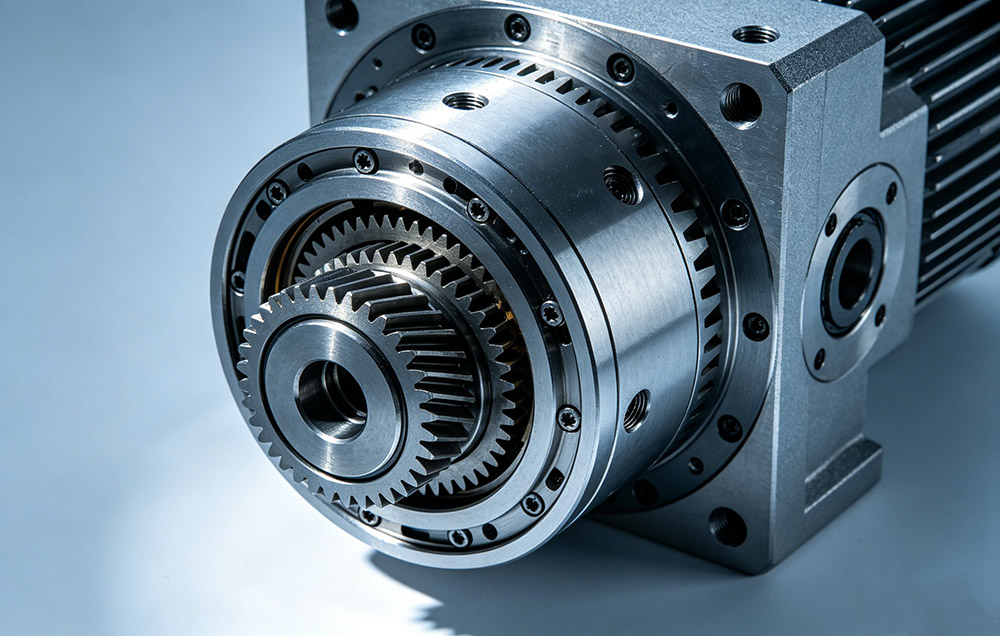
Overall, harmonic planetary gears provide a balanced solution for applications requiring both precision and strength. Explore our Harmonic Planetary Gearbox solutions and discover how I bring together precision, high torque, and compact design for your motion control needs. If you need more details or support, feel free to get in touch anytime.
Q1 What is a harmonic planetary gearbox?
A harmonic planetary gearbox is a hybrid motion system that combines harmonic drive technology with planetary gearing to deliver high torque, precision, and compact design efficiency.
Q2 How is it different from a standard planetary gearbox?
A standard planetary gearbox focuses on load distribution and durability, while a harmonic planetary gearbox emphasizes precision, reduced backlash, and smoother motion control.
Q3 What does HPGP stand for?
HPGP stands for Harmonic Planetary Gearbox, a high-torque hybrid gearbox system designed for servo applications and precision automation.
Q4 Where are harmonic planetary gears commonly used?
They are widely used in robotics, CNC systems, semiconductor equipment, medical devices, and other high-precision automation industries.
Q5 Are harmonic planetary systems better than planetary gearboxes?
Neither is universally better. The choice depends on whether the application prioritizes torque capacity, precision, compact size, or long-term heavy-duty operation.