How to Choose the Right Gear Reducer
Learn how to choose the right gear reducer with key factors: precision, load capacity, manufacturer quality & industry matching tips for automation systems.
 June 18, 2026
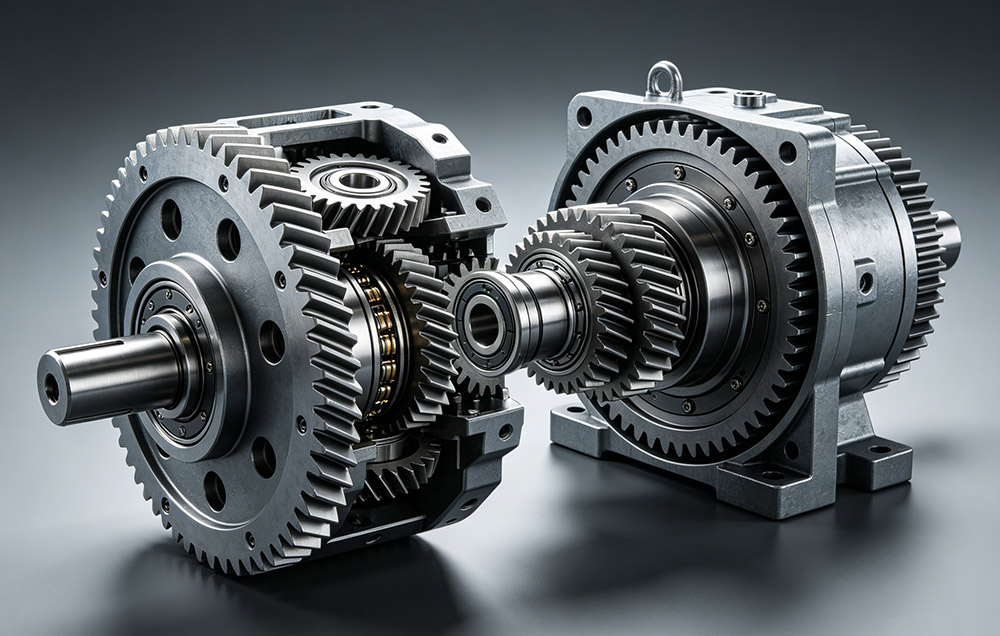

Selecting a gear reducer is not only about matching torque and speed. It directly affects positioning accuracy, system stability, service life, and overall machine performance.
Different applications require different transmission principles, and choosing the wrong type can lead to inefficiency, vibration issues, or premature wear. Understanding how harmonic drives, helical gear reducers, and selection criteria differ helps build a more reliable motion system from the start.

Core Takeaways
Before going deeper, here are the key points to keep in mind:
- Harmonic drives are best suited for high-precision, compact, and zero-backlash applications
- Helical gear reducers are preferred for smooth operation, high load capacity, and industrial robustness
- Selection depends on torque, accuracy, space constraints, speed, and duty cycle
- Manufacturer capability affects long-term reliability as much as product specifications
- Application environment and system integration should never be ignored during selection
Understanding Gear Reducers in Motion Systems
A gear reducer is designed to lower input speed while increasing torque output. It also improves control precision and load handling. In robotics, automation equipment, CNC systems, and medical devices, gear reducers are core transmission components.
Among the many types available, harmonic drives and helical gear reducers are two widely used solutions, each built on very different mechanical principles.
What Makes Harmonic Drives Unique
Harmonic drives, also known as strain wave gear systems, use elastic deformation rather than traditional rigid gear meshing. This structure allows extremely compact design and very high reduction ratios within a single stage.
Key Characteristics
| Key Characteristic | Description |
| Extremely high precision with near-zero backlash | Provides very accurate motion control with minimal mechanical play. |
| High reduction ratios in a compact form | Achieves large gear reduction within a small and space-saving structure. |
| Lightweight structure suitable for robotic joints | Reduces overall system weight, making it ideal for robotic applications. |
| Smooth motion with excellent positioning repeatability | Ensures stable, smooth operation with consistent positioning accuracy. |
Typical Applications
Harmonic drives are commonly used in collaborative robots and industrial robotic arms, where precise and smooth motion control is required. They are also widely applied in aerospace mechanisms due to their compact size, lightweight structure, and high reliability.
In semiconductor and precision manufacturing equipment, harmonic drives enable extremely accurate positioning and stable operation. Additionally, they are used in medical robotic systems to support precise and controlled movements in surgical and diagnostic applications.
When Harmonic Drives Are the Better Choice
They are especially suitable when:
- Space is limited, but torque demand is high
- Precision positioning is critical
- Smooth motion control is required
- The load is relatively stable without heavy shock impact
While harmonic drives offer excellent precision, they are less ideal for very high-speed continuous operation or environments with frequent shock loads.
Helical Gear Reducers and Their Strengths
Helical gear reducers use angled gear teeth that engage gradually, which allows smoother and quieter transmission compared to straight-cut gears. This design improves load distribution and efficiency.
Key Characteristics
| Key Characteristic | Description |
| High load-bearing capacity | Can handle large mechanical loads, making it suitable for demanding applications. |
| Smooth and quiet operation | Provides stable motion with reduced vibration and noise. |
| Strong efficiency under continuous operation | Maintains good performance during long-term, continuous working conditions. |
| Suitable for heavy-duty industrial use | Designed for robust performance in industrial environments with high power demands. |
Typical Applications
Helical gear reducers are widely used in conveyor systems, packaging machinery, and industrial automation lines, where smooth and efficient power transmission is required. They are also commonly applied in material handling systems to ensure reliable movement of loads.
In addition, helical gear reducers are found in general-purpose industrial equipment, supporting a wide range of mechanical and manufacturing applications.
When Helical Gear Reducers Are the Better Choice
They are often preferred when:
- High torque and durability are required
- Continuous operation under load is expected
- Cost efficiency is a priority
- Noise reduction is beneficial but ultra-high precision is not required
Compared with harmonic drives, helical gear reducers are generally more robust under harsh industrial conditions and can handle higher mechanical stress.
Key Factors When Choosing a Gear Reducer
Choosing between harmonic and helical types depends on system requirements rather than a single specification.
| Selection Factor | Helical Gear Reducers | Harmonic Drives |
| Torque and Load Requirements | Well-suited for high torque and shock loads, providing strong and stable power transmission. | Suitable for stable, controlled torque in compact systems with moderate load demands. |
| Precision and Backlash | Moderate precision with some backlash, acceptable for general industrial use. | Extremely high precision with near-zero backlash, ideal for positioning and repeatability. |
| Space and Weight Constraints | Requires more space and is generally heavier, but flexible for industrial layouts. | Compact and lightweight, ideal for robotic joints and space-limited designs. |
| Speed and Duty Cycle | Excellent for continuous operation and long-duty cycles. | Best for controlled motion within moderate speed ranges. |
| Environmental Conditions | Performs well in harsh environments with dust, vibration, and shock. | Better suited for clean, controlled environments with lower mechanical stress. |
How to Choose the Right Gear Reducer Manufacturer
Even with the correct product type, manufacturer quality plays a major role in system reliability.
Technical Capability
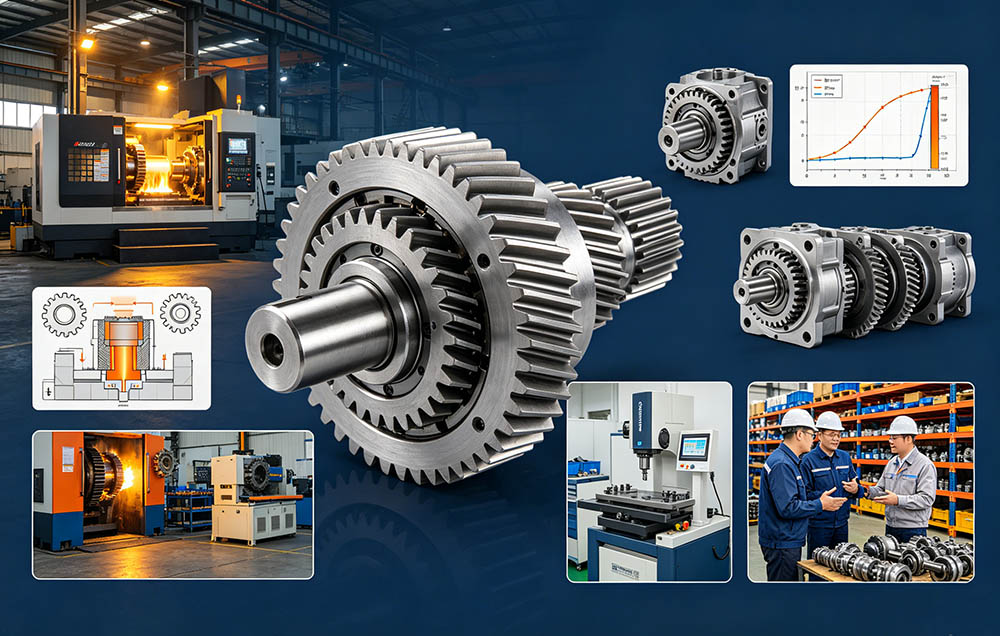
A strong manufacturer should offer stable gear machining precision to ensure consistent product quality and performance. They should also apply advanced heat treatment processes to improve the strength and durability of components.
In addition, consistent backlash control is essential for maintaining accuracy and smooth operation in gear systems. Reliable material selection further ensures long-term stability, wear resistance, and overall product reliability.
Quality Control System
Look for strict inspection standards to ensure each product meets required quality levels. Batch consistency is also important, as it guarantees uniform performance across production runs. Long-term performance testing helps verify durability and reliability under real operating conditions.
In addition, certification compliance ensures that the products meet relevant international standards and industry requirements.
Engineering Support
Good manufacturers often provide application-based selection assistance to help customers choose the most suitable products for their specific needs. They may also offer custom ratio or mounting options to meet unique design requirements. In addition, integration guidance for robotic or industrial systems is commonly provided to ensure smooth installation and optimal system performance.
After-Sales Reliability
Support quality is especially important when systems operate continuously. Spare part availability ensures that replacements can be obtained quickly when components wear out or fail. Technical troubleshooting support helps resolve operational issues efficiently and minimize downtime.
In addition, fast response for production issues is critical to maintain stable system performance and avoid interruptions in manufacturing or industrial processes.
Choosing a manufacturer is not only a procurement decision but also a long-term system stability decision.
Application Matching: Choosing the Right Type
Different industries naturally lean toward different solutions:
| Industry | Preferred Solution |
| Robotics and automation | Harmonic drives |
| Heavy industrial production | Helical gear reducers |
| Precision medical systems | Harmonic drives |
| Packaging and conveyor systems | Helical gear reducers |
| Semiconductor equipment | Harmonic drives |
| General machinery | Helical gear reducers |
Understanding application context helps avoid overengineering or under-specification.
Common Selection Mistakes to Avoid
Several mistakes often lead to poor performance outcomes:
- Choosing based only on torque rating without considering duty cycle
- Ignoring backlash requirements in precision systems
- Overlooking installation space constraints
- Selecting a reducer without evaluating load shocks
- Focusing only on price instead of lifecycle performance
A balanced evaluation ensures better long-term efficiency and reliability.
Conclusion
Choosing the right gear reducer is a balance between precision, durability, space, and operating conditions. Harmonic drives excel in compact, high-precision systems, while helical gear reducers deliver strong performance in demanding industrial environments.
When combined with a reliable manufacturer and proper system matching, the result is a motion solution that performs consistently and efficiently over time.
Explore our gear reducer solutions and find the right fit for your application. We are here to help you choose between harmonic drives and helical gear reducers with confidence. If you need support or have any questions, feel free to get in touch with us anytime.
Q1 What is the main difference between harmonic and helical gear reducers?
Harmonic drives focus on ultra-high precision and compact design, while helical gear reducers focus on durability, smooth operation, and load capacity.
Q2 Are harmonic drives always better for robotics?
Not always. They are ideal for precision robotic joints, but heavy-duty robotic systems may use helical or planetary gear reducers depending on load requirements.
Q3 Can helical gear reducers achieve high precision?
They can provide good accuracy, but they generally cannot match the near-zero backlash performance of harmonic drives.
Q4 How do I decide the correct reduction ratio?
The ratio depends on required output speed, torque, and motor characteristics. It is often determined through system-level calculation rather than a single formula.
Q5 What matters most when choosing a manufacturer?
Consistency, machining accuracy, quality control, and engineering support are often more important than just product specifications.