How to Maintain Harmonic Reducers in Production Equipment
Production maintenance for harmonic reducers: lubrication, inspection checklists, warning signals, spare parts strategy, and Laifual Drive support resources.
 August 16, 2026
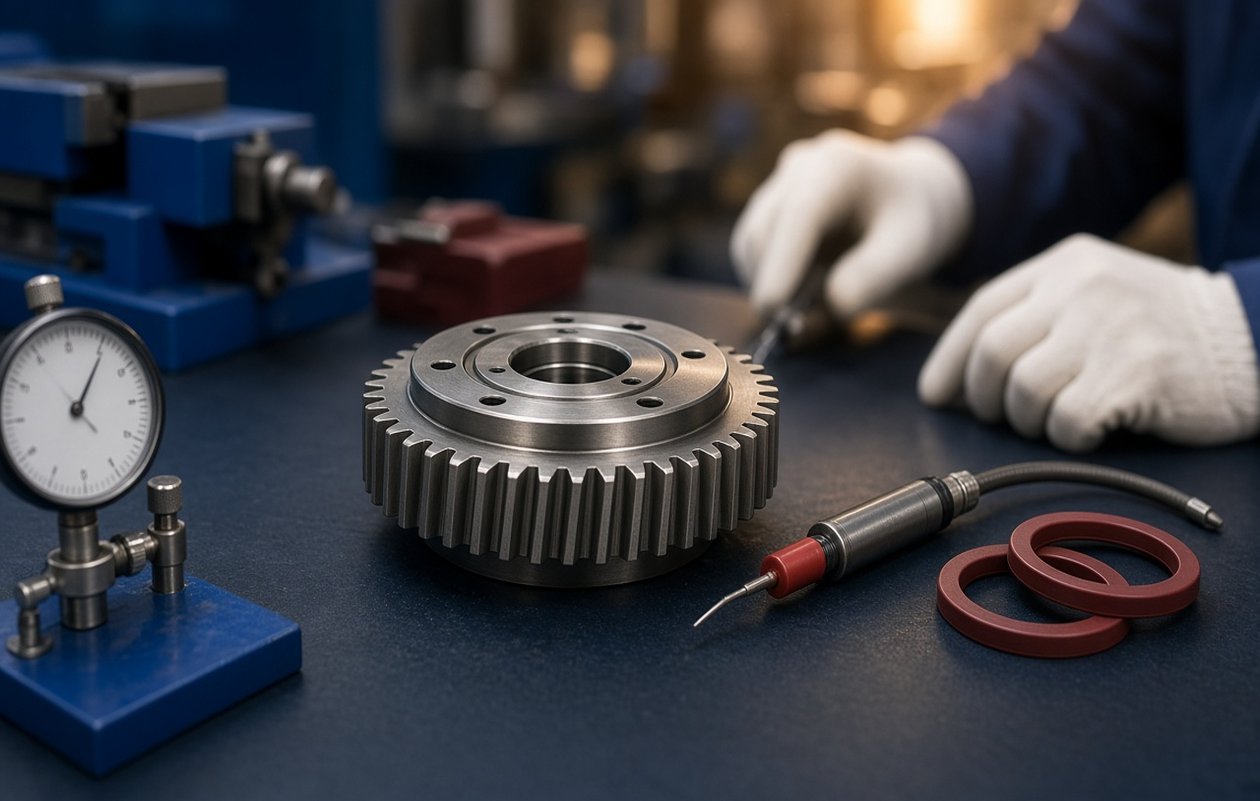
 > How to Maintain Harmonic Reducers in Production Equipment
 Depending on the model and operating conditions, harmonic reducers can have a design life of 10,000 hours or more, but built to last is not the same as maintenance-free. In production equipment, a reducer failure means unplanned downtime, lost output, and expensive repairs, and the cost of that downtime almost always dwarfs the cost of the reducer itself. A straightforward maintenance routine, built around lubrication, inspection, and early replacement, can help preserve performance and support the expected service life of a reducer and catches problems while they are still cheap to fix. This guide covers everything a maintenance team needs to keep harmonic reducers running.
Why Maintenance Matters
The economics are simple. A reducer might cost a few hundred dollars, but the hour of production lost while it fails can cost thousands, and a failure that damages surrounding components costs even more. Preventative maintenance, checking lubrication, monitoring temperature, measuring backlash, and replacing parts on a schedule, is the cheapest insurance a plant can buy. Plants that run a disciplined maintenance program for their reducers consistently report longer component life and fewer unplanned stops than plants that wait for failures to announce themselves.
Lubrication: A Critical Maintenance Factor
Use the Right Lubricant
Harmonic reducers require specific greases designed for the flexspline deformation that happens inside the gear. The grease has to cling to surfaces that flex thousands of times per minute, which ordinary bearing grease is not designed to do. Using the wrong grease, or the wrong amount, accelerates wear and raises operating temperature. The correct specification is always the one in the manufacturer documentation, and Laifual Drive publishes its lubrication guidance in the technical resources section.
Follow the Relubrication Schedule
Grease degrades over time and faster at higher temperatures. Relubrication intervals vary by model, lubricant, load, speed, temperature, and duty cycle. Always follow the manufacturer’s specified lubrication interval. The practical approach is to track operating hours on each reducer and schedule relubrication before the interval elapses, rather than relying on memory or calendar dates that drift from actual usage.
Signs Your Reducer Needs Attention
The three senses and one instrument cover most early warnings. Listen for noise that changes character, a reducer that gets louder over weeks is wearing. Feel for temperature. Monitor operating temperature against the manufacturer’s specified operating range or an established baseline. Look for leaks, oil on the outside means seals are failing. And measure, a backlash check with a dial indicator over time will show a trend long before the joint becomes visibly sloppy. Any one of these signals, taken early, turns a scheduled replacement into a minor task instead of an emergency.
| Check | What to Watch | Recommended Action |
|---|---|---|
| Listen | Noise that changes character over weeks | Schedule inspection and compare with baseline recordings |
| Feel | Operating temperature vs manufacturer range or baseline | Check load, lubrication level, and duty cycle |
| Look | Oil on the housing exterior | Inspect seals and mounting interfaces |
| Measure | Backlash trend with dial indicator | Plan replacement before limits are exceeded |
Inspection Checklist
Every Shift
Listen for abnormal noise
Look for leaks
Confirm the housing temperature is within the normal range
These three checks take under a minute per reducer and catch most developing problems.
Every PM Cycle
Measure backlash and compare with the recorded baseline
Inspect mounting bolts and couplings for looseness
Verify lubrication level and condition
Record a vibration reading for trend comparison
Keeping a simple log for each reducer makes the trends visible and turns maintenance from guesswork into data.
When to Replace vs Repair
If backlash exceeds the specification or the flexspline shows visible wear, replacement is usually more economical than repair. Whether repair or replacement is more economical depends on the reducer model, damage, service requirements, and repair capability. For critical stations, keeping a spare harmonic reducer on the shelf cuts replacement downtime from days to hours, and the cost of one spare is a fraction of one unplanned stop.
Laifual Drive Support and Replacement
Laifual Drive provides technical resources, application support, and replacement reducers suitable for the application for production equipment. The engineering team helps identify the right model, the right lubricant, and the right maintenance schedule for a given duty cycle. Datasheets and guides are available in the download center, and the contact page is the fastest route to application support. For plants running many reducers, Laifual Drive can also help set up a spares strategy that matches the criticality of each station.
Building a Maintenance Program That Sticks
The best maintenance program is one teams actually follow, which requires simplicity. Assign one person per shift to quick checks, integrate PM tasks into the existing maintenance calendar, and keep logs visibly accessible to mechanics.
Establishing a baseline is equally critical. Record noise level, operating temperature, and backlash when a reducer is new or freshly serviced. A shift from initial baseline data serves as a far better early warning than any absolute threshold. Facilities that track performance against baselines catch impending failures weeks before they occur.
Spare Parts Strategy
A practical spare parts strategy relies on a simple criticality ranking based on production impact:
Critical Stations
Keep pre-configured spare reducers stored with correct lubricant and mounting hardware ready for immediate installation. This reduces swap times from days to hours.
Non-Critical Stations
Allow components to run on standard supplier lead times, freeing up inventory budget.
Proactive planning requires discipline rather than exotic tooling, forcing teams to make replacement decisions before failures happen.
Documentation as an Asset
Centralized documentation completes the program. Every reducer should have a clear record covering install date, operating hours, lubricant type, and historical inspection logs.
A shared log transforms individual memory into organizational intelligence. New technicians can review equipment history in minutes, while maintenance managers easily track approaching service intervals. This discipline costs little to implement and compounds in value over the lifespan of the equipment.
FAQ
How often should I relubricate a harmonic reducer?
Typically every 5,000 to 20,000 hours depending on load and temperature; check the datasheet for your model.
What happens if I use the wrong grease?
Wear accelerates, temperature rises, and service life shortens significantly. Always use the specified grease.
Can I repair a worn reducer?
Sometimes, but replacement is usually more cost effective when backlash exceeds spec or the flexspline is worn.
How do I know when to replace?
Monitor backlash and noise trends; when they exceed the manufacturer limits, plan replacement at the next scheduled downtime.
Need a maintenance plan or replacement reducers? The engineering team at Laifual Drive can help with both.