The Future of Transmission Technology
Discover the future of transmission technology. Explore how high-performance harmonic reducers are transforming industrial automation and motion control.
 February 25, 2026
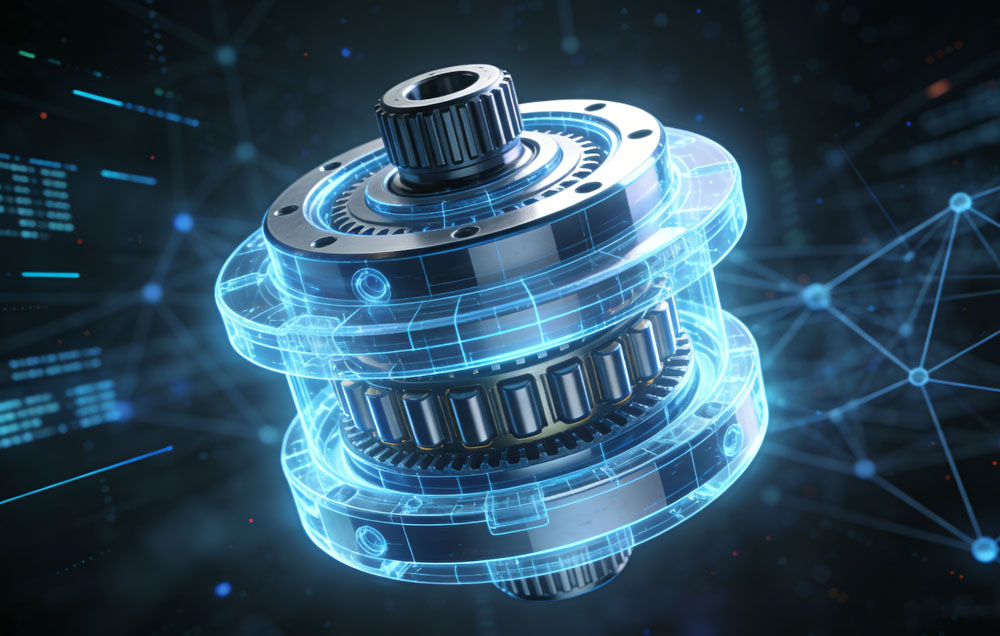

As Industry 4.0 continues to reshape global manufacturing, transmission technology is evolving from standalone mechanical components into integrated systems that define motion accuracy, reliability, and automation efficiency.
Harmonic reducers, widely used in robotic joints, are increasingly influencing how industrial robots and humanoid robots perform in real world production environments.
Laifual is actively shaping this evolution through continuous innovation in gear tooth profile design, joint module integration, and application driven engineering, supporting a broad range of intelligent manufacturing scenarios worldwide.
Precision Transmission in Industrial Robot Applications
Industrial robots operating in welding, painting, and electronics assembly environments require extremely stable motion control. In automotive manufacturing, welding operations demand positioning deviation within plus or minus zero point zero one millimeters to maintain structural consistency and product quality.
Laifual harmonic reducers, delivering positioning accuracy of plus or minus fifteen arcseconds, support stable robotic motion under high speed conditions. In high volume automotive welding lines, robots equipped with Laifual reducers have demonstrated lower rework rates and improved throughput, supporting both productivity and process stability.
In electronics manufacturing, fast response and lightweight design are equally important. Laifual’s 03 series micro harmonic reducers, weighing 7.86 grams, support placement operations at frequencies of up to five cycles per second while maintaining positioning deviation within plus or minus zero point zero two millimeters. This performance supports higher yield rates in high precision assembly lines.
Painting and coating applications further challenge transmission systems due to continuous motion and rapid directional changes. Through dynamic load distribution design, Laifual reducers maintain repeatable positioning accuracy within plus or minus zero point zero one millimeters during high speed movement. This improves coating uniformity while reducing material consumption.
Humanoid Robots and the Next Stage of Motion Systems
The rapid development of humanoid robots is expanding the scope of precision transmission applications. A single humanoid robot typically integrates twenty to forty harmonic reducers across finger joints, arms, and torso sections.
Laifual’s micro series reducers, including 03, 05, and 08 models, reduce overall weight by approximately thirty percent while maintaining torque density suitable for compact joint structures.
In humanoid robot hand applications, these reducers enable controlled gripping forces as low as zero point one newtons, supporting delicate manipulation tasks alongside extended operating cycles.
This combination of lightweight structure, motion stability, and durability aligns with the broader trend of system level optimization in next generation robotics.
Integrated Joint Modules for Automation Workstations
Beyond individual components, transmission technology is increasingly moving toward integrated solutions. Laifual joint modules combine harmonic reducers, encoders, and drive systems into compact assemblies designed for collaborative robots and automated workstations.
This integrated approach supports simplified system deployment and faster commissioning. In logistics automation environments, workstations equipped with Laifual joint modules have increased sorting throughput from two hundred units per hour to five hundred units per hour, while reducing labor demand and operational variability.
Such system-level integration reflects the broader direction of transmission technology toward modular, scalable, and application-oriented solutions.
Defining the Direction of Precision Transmission
Across industrial robotics, humanoid robots, and intelligent automation, transmission technology is no longer defined solely by mechanical parameters. Digital control compatibility, long-term stability, and system integration are shaping how transmission solutions are selected and deployed.
By advancing Delta tooth profile technology and expanding joint level solutions, Laifual continues to contribute to the future of transmission technology, supporting manufacturers as they adapt to smarter, more flexible production environments.
To learn more about Laifual’s precision transmission technologies and application solutions, please visit our official website or contact our global technical team for further discussion.